A holistic medical approach developed in the 19th century, osteopathy restores health through hands-on techniques that improve movement, ease pain, and support the body's natural healing processes.
Grounded in medical science, modern acupuncture uses fine needles to ease pain, release tension, and support recovery—enhancing wellbeing through the body's own healing response.
A favourite among athletes, Kinesio taping uses flexible tape to support joints, reduce pain, and aid recovery—boosting movement and circulation without restricting motion.
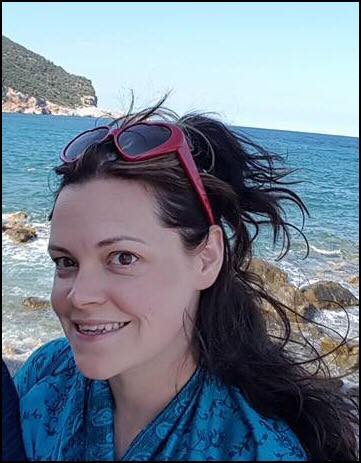
I'm an osteopath and qualified in 2009 from the European School of Osteopathy in Kent. I then did further training in other modalities of treatment including kinesio taping and acupuncture.
Since a young age I have enjoyed many different forms of dance, ranging from ballet to Irish and continue to dance regularly. I was always hands on, enjoying playing the piano and working through all my grades. This gave me the manual dexterity I consider to be so important in my job.
These hobbies have fed my continuing interest in the biomechanics of the human body. I'm passionate about understanding how one area of dysfunction leads to compensatory areas of dysfunction throughout the body.
There is never a dull moment being an osteopath as my patients range from babies, pregnant ladies, sports injuries and everything in between.
I am registered with the General Osteopathic Council (GOsC) which regulates the practice of osteopathy in the UK to promote patient safety.
Miss R.S. Jessup B.Sc(Hons) DO
"Prestatyn Osteopathy Clinic completely transformed my recovery. Highly recommend!"
"Professional, caring, and effective treatments every time."
When you visit an osteopath for the first time a full medical history will be taken and you will be given an examination.You will normally be asked to remove some of your clothing (as in any medical procedure) and to perform a simple series of movements so that your general movement and especially any restrictions in mobility may be assessed. Any points of weakness, excessive strain, muscular hypertonicity or specific injury will be identified.
Depending on your presenting symptoms and clinical findings, further medical examinations may need to be performed to aid diagnosing the exact cause of the problem and give an accurate diagnosis and prognosis for your condition. This may of course include, where deemed necessary, referring you to your GP.
We accept the following payment methods:
Many private health insurance schemes give benefit for Osteopathic treatment. It is essential to check your policy conditions.
Osteopaths are trained to recognise and treat many causes of pain. Osteopathy is an established system of diagnosis and manual treatment which is recognised by the British Medical Association as a discrete clinical discipline.
In 1993, Osteopathy became the first major complementary health care profession to be accorded statutory recognition. This means only those practitioners satisfying its educational and ethical standards will be entitled to call themselves Osteopaths. A register of all Osteopath is held by the General Osteopathic Council (GOsC). (It is against the law to call yourself or advertise as an Osteopath unless you are on this register). Patients have the same safeguards as when consulting a Dentist or Doctor. Osteopaths work within a system of high standards of training and practise with a rigid code of ethical conduct.
Osteopathy (Osteopathic Medicine) was started during the later half of the Nineteenth century by Dr. Andrew Taylor Still, a medical doctor practising in America. He was one of the first physicians to fully appreciate the body to be an intelligent structure capable, under the right conditions, to maintain health. In fact it was only when the internal mechanism was disturbed too far outside of the normal that a pathology arose.
After the loss of his own two children to the conventional medicine of that time, Dr. Still devoted his life to the science of the practise he called "Osteopathy" (Osteo - meaning bone & pathology - meaning disease (taking this form more literally to mean dis-'ease'))
He was said, by his friend and even patients, to be a very studious, initiative and deeply religious man and this can be seen in his work and in the way he respected the body.
Owing to the success and benefits of Osteopathy at that time, within 10 years of the first "Osteopathic School" opening there was recorded over 50,000 practitioners and about 100 Osteopathic Schools.
Today in America around 25 - 35% of all mainstream Medical Practitioners are qualified Osteopaths.
When Osteopathy originated it was used as a complete medicine for all illnesses. However, today it is better known for its effects in the non-surgical treatment of the spine, muscle and joints. Infact, often being used to compliment, avoid or even to negate surgery.
Postnatal women suffer complaints attributable to mechanical strains acquired during pregnancy and after, due to the complete life changes occurring with little ones around the increased lifting work load.
Pregnancy puts a huge strain on the mother's body, especially the pelvis and low back. Treatment can be given to relieve these strains and reduce back pain.
Most pregnant women find Osteopathic treatment gives relief from other problems with child bearing such head-aches, diaphragmatic pain, etc.
One or two treatments in the final few months of pregnancy may help ensure that the pelvis is working well and make for an easier labour.
The bones of the skull are still separate at birth and are designed to overlap slightly during the birth process. Occasionally these fail to "unfold" completely afterwards which may lead to problems such as irritable/crying babies, poor feeding or bad sleeping habits. This is especially noticed in the cases of prolonged or difficult births, forceps/ventousse deliveries or ceasarian births.
The forces of being born from the uterine contractions etc may cause a tightness within the upper cervical spine of the new born - this tightness in itself may present as feeding difficulties, colic, a 'sicky' baby and irritability, and your Osteopath will be able to explain to you the reasons for this during your visit.
Teething and sudden growth spurts also often upset the development of a growing child and may be a trigger for problems in other areas.
Because of the variety and gentleness of many osteopathic techniques, there is no minimum age for treatment. Some parents bring there baby for a check-up within a few days and others come later when problems start to become apparent.
Teenagers become much more active and take part in many sporting and recreational activities which carry the risk of sprains and strains. Skillful diagnosis and treatment by the osteopath can prevent musculo-skeletal problems developing and allow the body's framework to heal naturally and adjust to the stresses and strains put upon it.
Computer games appear to cause children bad postural habits by often sitting incorrectly when using the computer. This problem is often exacerbated by poor ergonomic set up of home computers.
Carrying heavy overloaded school bags regularly may stress the shoulder girdle. Stresses of extra studying at exam time could also increase the tension through the spine.
As the elderly population increases, the importance of maintaining health and independence for as long as possible is becoming a pressing national concern. Osteopathy can make a key contribution to optimising fitness and improving the quality of life for retired people.
Many of these people accept too readily that their aches and pains are due to ageing and that stoically they must learn to live with them. There are many conditions that can be helped by osteopaths and even if treatment does not provide complete relief, it can maintain mobility in the spine and joints and reduce stiffness and the need for painkillers. Not forgetting of course that, owing to increasing the general health of the body and tissues, osteopathic treatment can also be beneficial to prepare a patient for joint replacement surgery ensuring the patient an improved recovery.
Extensively trained by the British Medical Acupuncture Soceity (BMAS), Prestatyn Osteopathy Clinic offers modern acupuncture.
Modern acupuncture uses the principles of anatomy, physiology and pathology rather than the chinese philosophy and meridians used in traditional acupunture.
During acupuncture treatments, sterile disposable needles are inserted into the skin and left in place from 10 seconds upto 30 minutes depending upon the desired effect. Alongside osteopathy, the needles help with the conditions listed below, ease muscular tension, stimulate pain relief and can relax the patient.
Prestatyn osteopathy clinic uses acupuncture to help treat many orthopaedic conditions including
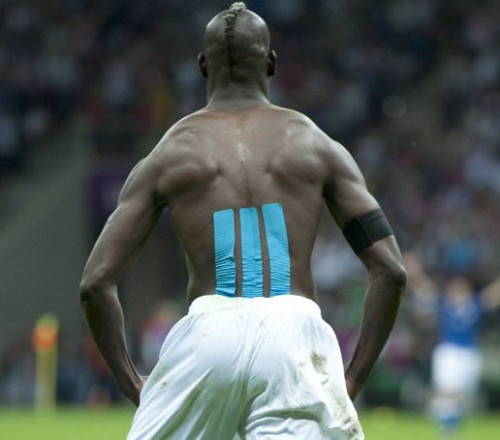
Kinesio taping was widely seen at first in the 1988 Seoul Olympics. Since then it has been more popular throughout Europe for athletes in Commonwealth games and Olympic games. It is now widely available and popular amongst many sports players from amateur level to professional.
Kinesio taping allows support and stability to joints and muscles whilst assisting the circulation and range of movement to the joint affected.
The taping can be applied to the muscles to reduce pain and inflammation, it can be used to inhibit the muscle, therefore relaxing the overused muscle, or to strengthen the muscle. The tape itself has elastic properties and dependent on the direction and tension given to the tape it will give either of the desired effects.
It can be used alongside other treatment modalities such as osteopathy and acupuncture. It is commonly used for sports injuries, but also in conditions such as plantar fasciitis, whiplash injuries, sciatica and much more.
Italian footballer Mario Balotelli and Wales Rugby Union player Rhys Priestland can be seen here wearing the Kinesio tape.